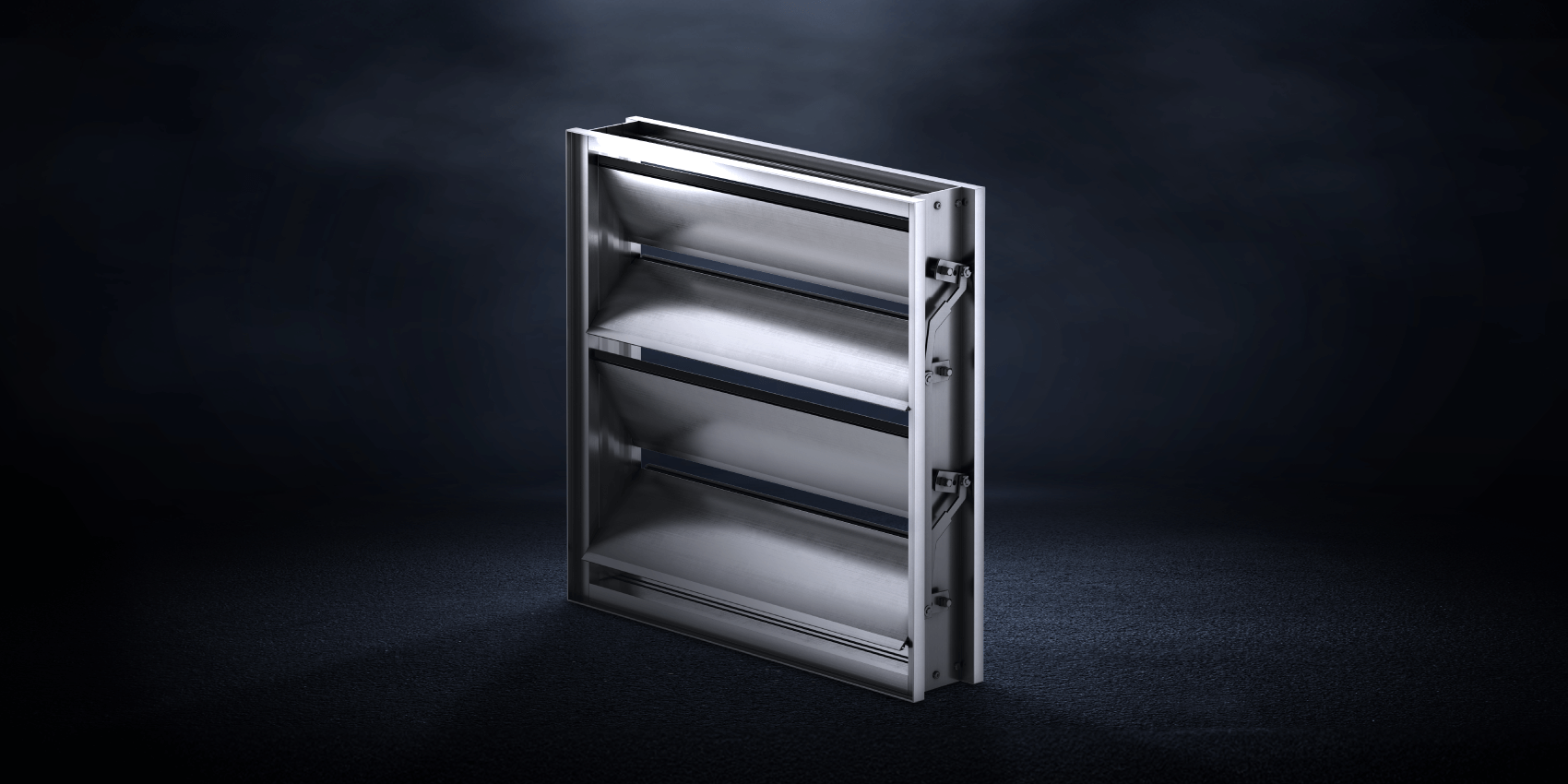
Volume control dampers regulate the flow of air in an HVAC system. As such, the critical performance factors when designing efficient systems are pressure drop and leakage.
Pressure drop through a damper refers to the loss of static pressure as air flows through the damper, essentially the resistance to airflow. The lower the pressure drop, the more efficiently the air moves across a damper, resulting in less fan energy required to move the air through the system.
Low-leakage dampers are designed to minimize air leakage—the amount of air that passes (“leaks”) through a closed damper—ensuring a tighter seal and improved performance. The lower the leakage rating, the less energy wasted. Building and energy codes contain requirements for the performance ratings of dampers in various applications.
Third-Party Certification for Volume Control Dampers
Some codes and standards require that performance must be certified and listed by a third-party agency. When the damper’s performance data is administered by a third party, such as the Air Movement and Control Association International, Inc. (AMCA), the performance data of the damper has been independently verified and held to a specific set of standards. Designers and end users can have a high level of confidence that the selected damper will perform as intended when installed properly.
The AMCA 511 Certified Ratings Program (CRP) is an example of a third-party ratings program that demonstrates damper performance on important factors such as leakage.
Key Factors for Volume Control Damper Performance
When designing efficient air moving and control systems, consider these factors to ensure dampers function as intended and maximize their performance benefits.
- Pressure Drop: The lower the pressure drop is for a given damper, the lower its resistance to airflow. A lower pressure drop means less energy required to move the air through the damper, resulting in a more efficient system.
- Thermal Efficiency: To achieve the greatest level of protection from the formation of condensation or thermal loss through a closed damper, thermally efficient dampers have proven their ability to limit heat transfer through a closed damper.
- Leakage: The amount of air passing through a damper when it is in the closed position at a specific pressure differential. Low-leakage dampers save operating costs by reducing wasted energy leaking through the damper.
Configuring Volume Control Dampers for Corrosion and Rust
In addition to a damper’s performance relative to the air moving system requirements, a damper’s application and geographic location may require additional construction features or options to address specific concerns. In coastal applications, saltwater corrosion may be one of those concerns. Saltwater will corrode and rust most unprotected galvanized steel over time, contributing to a decrease in the lifecycle of a damper. Dampers can be configured in several ways to be protected from the elements.
- Aluminum Construction: Aluminum naturally forms a protective oxide layer when exposed to air, making it resistant to corrosion. This makes aluminum dampers, which are lightweight but durable, ideal for coastal environments.
- Stainless Steel Construction: This provides both strength and corrosion resistance in demanding environments where long-term exposure to moisture, salt, or chemicals would quickly degrade standard materials. The chromium content in stainless steel forms a passive protective film that resists rust.
- Anodizing: This electrochemical process enhances the natural oxide layer on aluminum surfaces to create a harder, more corrosion-resistant finish.
- Coatings and Finishes: Protective coatings can be applied to dampers to provide an additional barrier against corrosion and oxidation.
Choosing a Volume Control Damper
Low pressure drop, low leakage, and high thermal efficiency are critical requirements for a damper that functions effectively and saves energy over time.
- Due to Greenheck’s R&D and manufacturing capabilities, our dampers have the lowest pressure drop across our range of sizes compared to our competitors.
- Most Greenheck VCD & ICD volume control dampers are AMCA-certified to Class 1A or Class 1 low-leakage performance.
- Greenheck’s Model ICD-45 is designed with thermally broken blades and frame as well as double-sleeved bearings to minimize thermal losses at the damper. It has the highest AMCA-certified thermal efficiency on the market. This makes it the industry’s first choice for applications where large thermal gradients exist between outside unconditioned air and inside conditioned air and condensation is a concern.
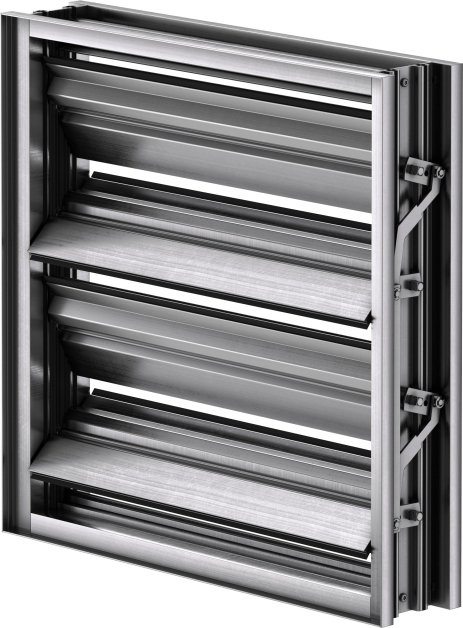 |
| Greenheck Model ICD-45 |
Coastal applications where saltwater can corrode damper materials over time require additional consideration. Model VCD-43 offers superior resistance to moisture, saltwater, and other corrosive agents with features such as an optional anodized finish and stainless steel linkage that includes axles and all hardware. It can also be configured with a silicone blade seal to maximize its durability and extend its life. More information about how these low-leakage dampers protect against corrosion is available here.
Selecting the right volume control damper goes beyond simply meeting airflow requirements. By combining high-efficiency design with durable material selection for the damper’s application, engineers can ensure that every component in the air movement system contributes to peak performance, lower lifecycle costs, and superior indoor environmental quality.
Dampers