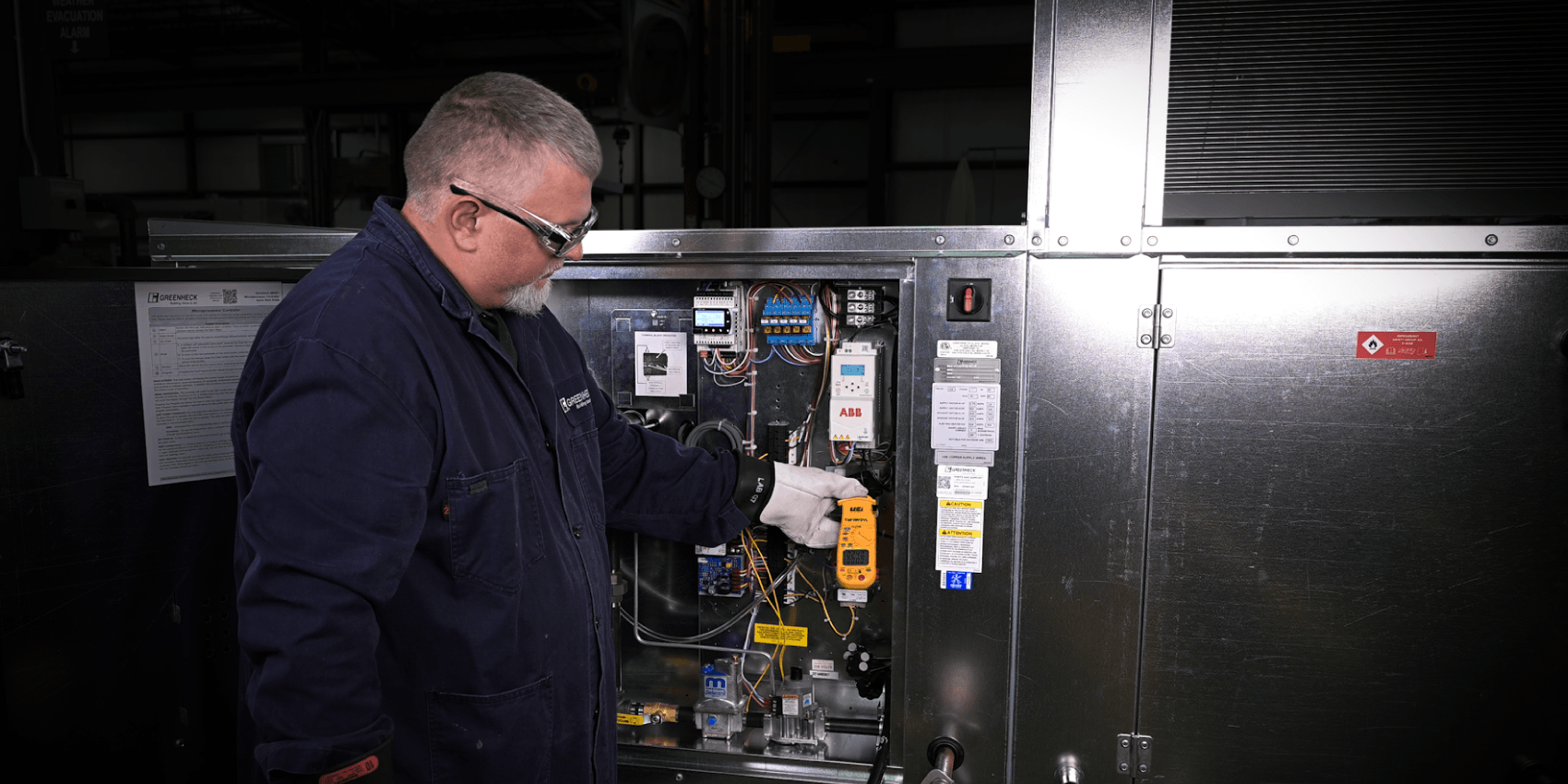
Make-up air (MUA) units replace air exhausted from a building with conditioned outdoor air to support ventilation, indoor comfort, and building pressure. Thoughtful MUA selection and system design can simplify start-up and ongoing service by pairing service-friendly unit features with appropriate access and clearances from the outset. The following key design and equipment considerations make MUA units easier to start up, troubleshoot, and maintain.
Plan for make-up air start-up during design.
At start-up, technicians verify fan operation and airflow, burner operation, gas pressure, controls, and other operating parameters. When designing and selecting, look for make-up air units with features that simplify setup, access, and verification.
- Hinged access doors allow technicians to open the cabinet quickly and repeatedly without having to remove and set aside access panels. This makes for easier inspection and adjustment of internal components.
- Microprocessor controllers control all aspects of unit operation and can be integrated with a building management system (BMS). They should be factory prewired, programmed, and tested to minimize field configuration and streamline start-up.
- Variable frequency drives (VFDs) control an electric motor’s speed by varying the frequency and voltage of the power supplied to it. They simplify start-up by allowing technicians to adjust fan speed to achieve design airflow without making mechanical drive changes. For ongoing maintenance, VFDs provide fault diagnostics for faster troubleshooting and help prevent issues through smoother motor starts.
Choose a manufacturer that simplifies start-up.
Even a well-designed MUA unit benefits from clear, accessible start-up guidance. Useful resources a manufacturer can provide include:
- A start-up report that’s more than just a checklist: Greenheck’s make-up air start-up report, which ships with all units, provides technicians with comprehensive start-up testing information. It includes a thorough checklist for the exterior, interior, blowers, and other components. Beyond that, it includes instructions such as how to start up the direct or indirect gas burners, cooling, or electric heater, depending on the model.
- Instructional videos that technicians can follow along with: Step-by-step videos help technicians with important procedures at start-up. For example, Greenheck’s start-up video for the DGX direct gas-fired make-up air unit shows technicians how to use the commissioning menu to verify the unit is installed, configured, and operating according to design requirements, as well as other tips such as how to change the pressure differential for the burner.
- Written materials to help with start-up and troubleshooting: In addition to the start-up report, Greenheck provides a quick-start guide on the interior of the electrical control center access door that walks the technician through each step of start-up. The Installation and Operation Manual (IOM) is also included with each unit as a resource.
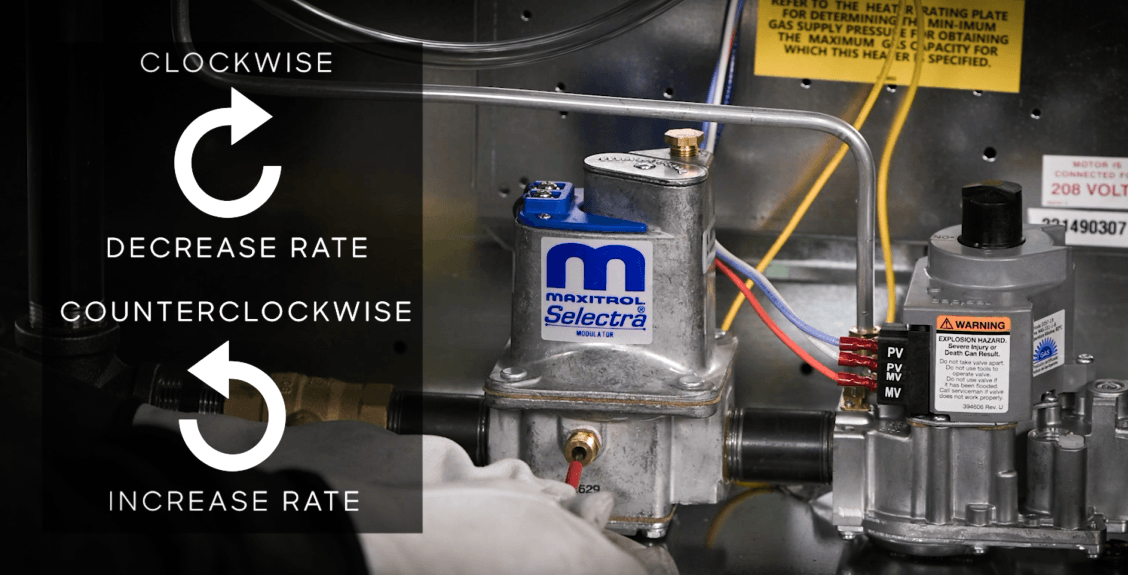
Greenheck's videos provide step-by-step walkthroughs for unit start-up.
Use controls to take the guesswork out of service.
Capable controls and diagnostic ability are both important in make-up air applications. An onboard microprocessor controller makes installation and commissioning simpler while supporting reliable operation. The controller should be factory-programmed and include:
- A backlit display screen with detailed messages and fault codes that help identify an issue. A digital remote true touchscreen is also available as an option for the most advanced monitoring capabilities.
- A web user interface (UI) for remote visibility into the unit.
- The ability to adjust make-up air output in real time based on temperature and other inputs, staying within operating limits to keep spaces comfortable.
- Integration with the BMS to receive occupancy information and adjust airflow accordingly, helping reduce unnecessary energy use during unoccupied or lower-demand periods. The controller can also coordinate with the fire alarm system to shut down make-up air and fan operation if flames or smoke are spreading.
Regular maintenance protects design intent.
Dirty filters, clogged intake components, or debris buildup on outdoor coils can prevent an installed unit from meeting its intended airflow, temperature, pressure balance, and energy performance. Engineers can make regular maintenance easier by providing adequate physical clearance around the unit for technicians to access serviceable components.
Equipment design also matters. Look for MUA units with filters that are easy to inspect and change, along with options such as dirty-filter sensors that indicate when attention is needed. Components that need periodic inspection or cleaning, such as coils, drain pans, and dampers, should also be readily accessible. Together, thoughtful product design, deliberate equipment selection, and intentional building design can reduce the time and effort required to keep any HVAC unit operating as intended.
If you’re planning to include make-up air in your building project and want additional information about features and capabilities, reach out to your local Greenheck representative.
Balancing and Commissioning Make-up Air