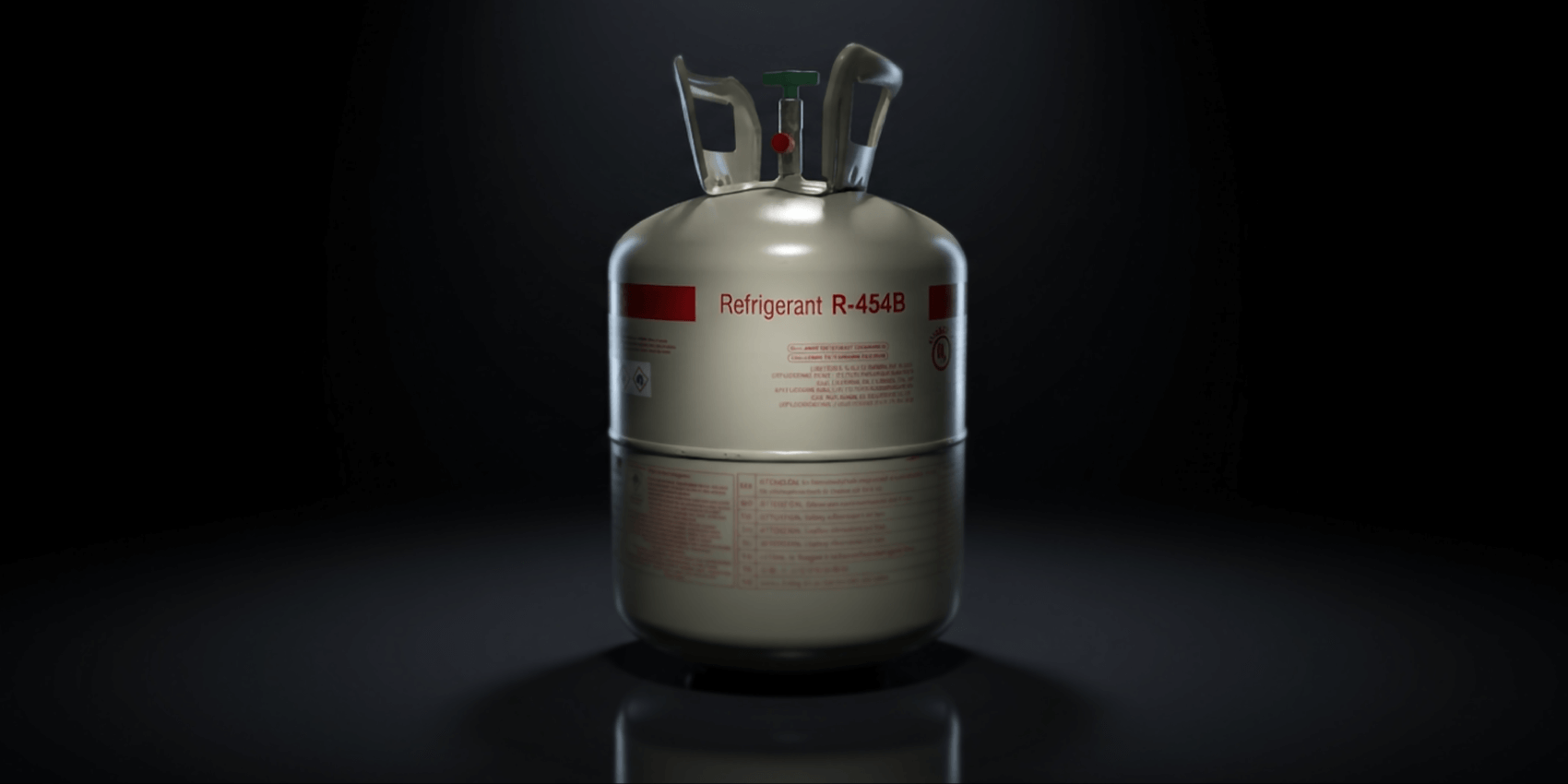
As of January 1, 2025, the EPA’s Technology Transitions rule requires most new residential and light commercial air conditioners and heat pumps to use refrigerant with a global warming potential (GWP) of 700 or less. Other HVAC/R product categories are also included in this transition, all with their own GWP limits and transition dates.
Over a year in, the industry is successfully navigating the switch to environmentally friendlier refrigerants in heat pumps and air conditioners. However, many questions commonly come up. From our experience as a manufacturer, here are answers to some of those questions.
Which refrigerants can and cannot be used in new equipment?
- ASHRAE has a classification system for refrigerants based on flammability and toxicity. This system includes classifications A1 and A2L.
- The commonly used A1 refrigerant R-410A, which has no flame propagation and lower toxicity, can no longer be used in new equipment because it is above the 700 GWP threshold.
- A2L refrigerants such as R-454B and R-32, which have a lower GWP, have become the industry standard in air conditioners and heat pumps.
- Even though A2L refrigerants also have a lower toxicity, they have lower (as opposed to no) flammability, so manufacturers as well as contractors and installers need to take safety measures to detect and prevent leaks.
For how long will R-410A be available?
- R-410A is still available. The EPA has stated they don’t want to impact existing systems in the field, so R-410A can be used in systems manufactured before 2025.
- Existing systems can still be serviced. The rule restricts new system manufacture and installation.
- Some states, such as California and Washington, require that R-410A used in older systems be certified as reclaimed refrigerant, not new “virgin” refrigerant.
- R-410A is still being manufactured and imported. However, the EPA issues limited annual production and import allowances for hydrofluorocarbon (HFC) refrigerants like R-410A. Those allowances decline over time to phase down total production and consumption.
- If higher-GWP refrigerants and the components of higher-GWP systems become more expensive over time, the decision will become whether it is more cost-effective to maintain or replace the equipment.
What does the transition away from A1 refrigerants mean for building codes?
- Throughout the U.S., many building codes and standards have already changed and some are still being tweaked. As the industry has had time to evaluate specific scenarios more closely, some requirements have been relaxed.
- Some states still have out-of-date codes, so state legislatures have passed laws to work around current building code requirements.
- This map provided by the Air-Conditioning, Heating, and Refrigeration Institute (AHRI) shows the current state law, refrigeration codes, and standards for every U.S. state and territory.
- The 2024 model codes contain all the necessary requirements for A2L systems. However, we expect that the 2027 versions will contain more clarifications and enhancements that make the rules easier to understand. If you don’t know which code will apply to your jurisdiction, refer to the 2024 code versions for now.
What about A2L refrigerant safety?
When manufacturers incorporate lower-flammability refrigerant precautions into their equipment, and installers and users follow manufacturer guidelines on startup and commissioning as well as ongoing operation, A2L refrigerants are as safe as any refrigerant category.
Example of precautions include:
- Minimum installed area requirements based on refrigerant charge
- Greenheck uses microchannel coils in air conditioners to reduce the amount of refrigerant required for a system.
- Potential sources of ignition may be isolated from refrigerant leaks or use controls to de-energize the risk in the event of a leak.
- Larger systems may use refrigerant sensors to trigger air circulation and engage controls to minimize released refrigerant charge. Controls may be used to trigger elements of mitigation implemented outside of the equipment.
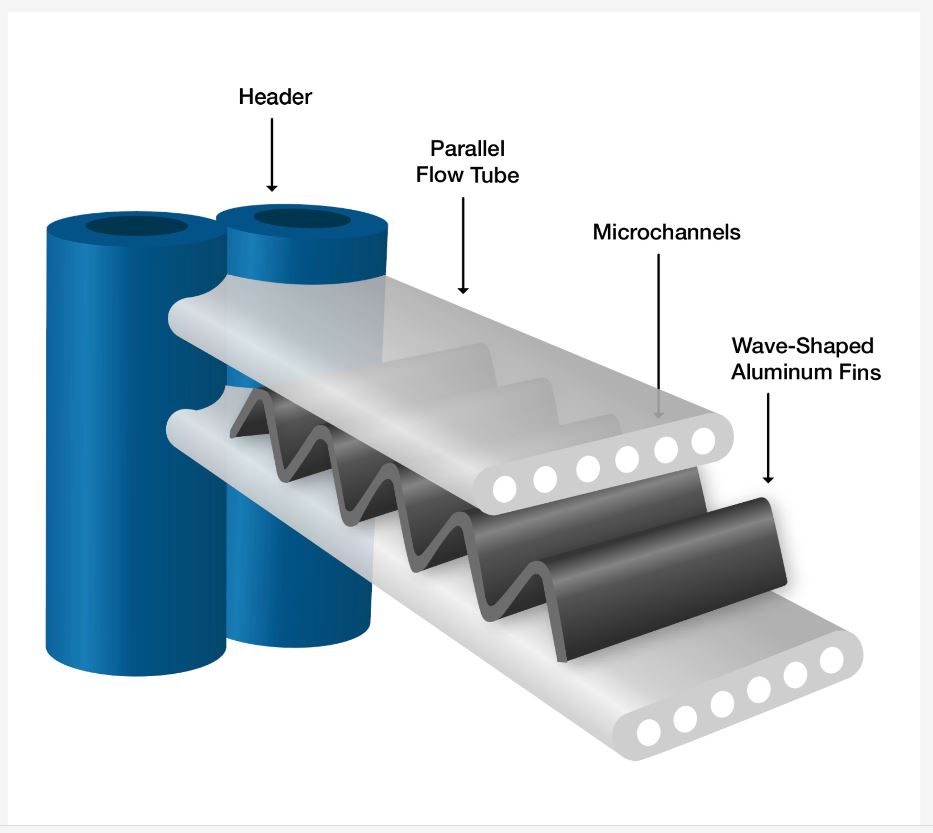
Microchannel coil construction
What should I be aware of regarding field installation?
Installers should be aware of any field-implemented elements of the refrigerant mitigation strategy when installing A2L equipment. For instance, do not overcharge units with refrigerant. Greenheck’s units have refrigerant charge labels located near each compressor that list the maximum refrigerant charge based on the space the unit is serving.
After installing the equipment, any refrigerant mitigation sequences need to be tested to make sure they work as intended. The installer places a jumper in the control circuit to make sure fans turn on, dampers open, and other safety measures are functioning.
What about variable refrigerant flow (VRF) equipment?
Variable refrigerant flow systems vary how much refrigerant flows to multiple indoor units based on demand for cooling and heating. This allows for simultaneous heating and cooling in different zones within the same building. VRF systems often have large refrigerant charges, and that refrigerant is piped throughout the building as opposed to being isolated to a single location. This adds safety challenges.
Because of this additional complexity, the EPA allows installation of VRF systems using A1 refrigerant through 2026, and even later in certain cases.
Can I retrofit an R-410A system to use R-454B?
It would be highly impractical to retrofit an R-410A system to use R-454B refrigerant, due to the changes and product evaluations that would be necessary to comply with new safety requirements.
- A2L products must be listed to the 60335-2-40 standard. At minimum, a field inspection and listing would be required, costing at least $15,000.
- There would also be electrical component changes needed to meet the new standard, as well as refrigerant component changes to have chemically compliant seals and gaskets.
- The result: spending about as much as you would on a new unit, with no guarantee that all the technical items could be resolved.
Are there still challenges with obtaining lower-GWP refrigerants?
In 2025, just after the transition took effect, there were challenges with R-454B cylinder availability. While availability has now stabilized, prices for R-454B are still higher than we expect them to be in the future.
For more information on this topic, see the EPA’s FAQ page on the HFC phasedown.
Codes/Standards DOAS Make-up Air