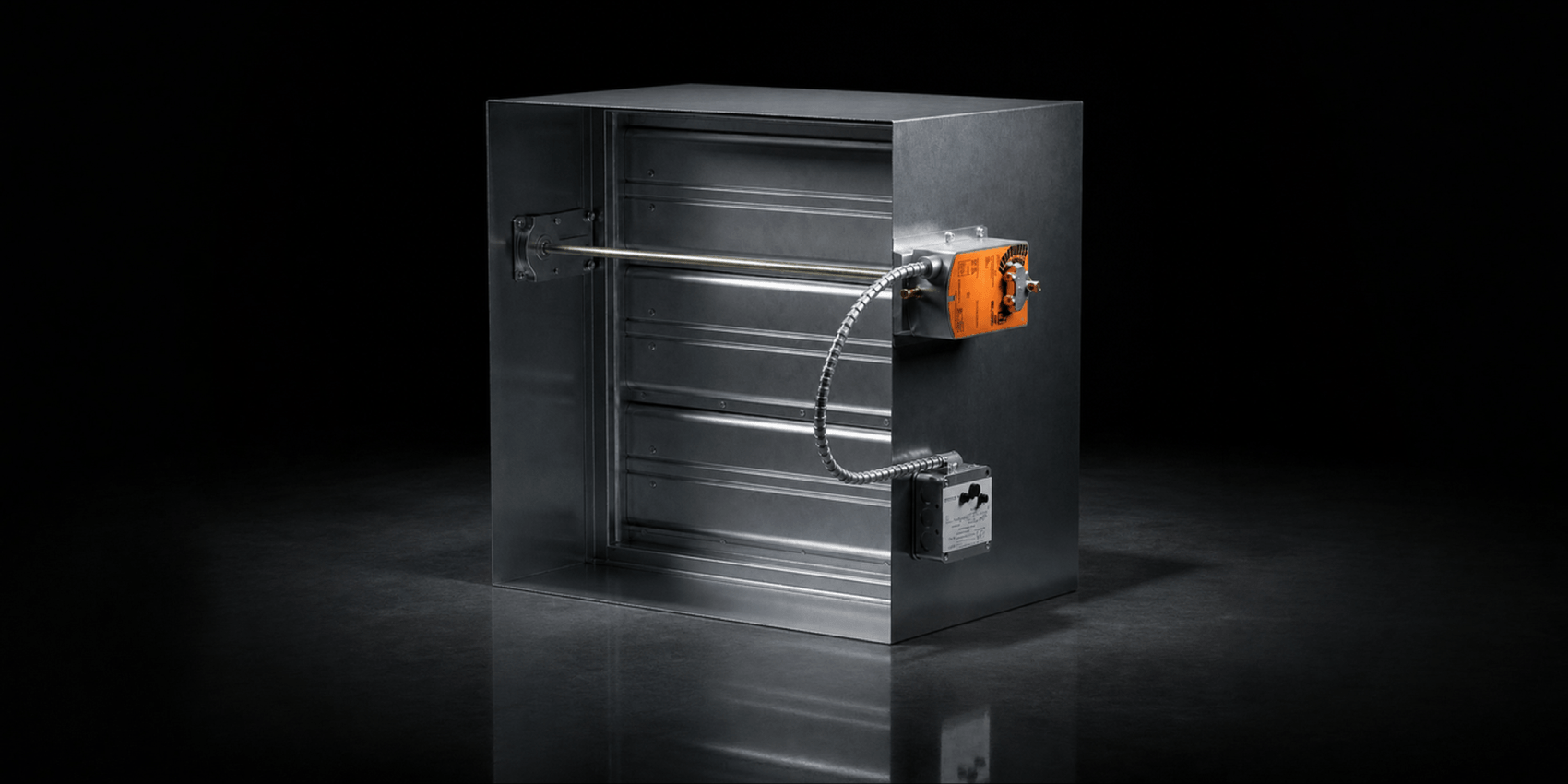
Combination fire/smoke dampers are life safety devices installed in HVAC ductwork and air transfer openings that are designed to prevent both the spread of fire and the movement of smoke throughout a building. They are subject to the requirements of National Fire Protection Association (NFPA) codes NFPA 80 (for fire dampers) and NFPA 105 (for smoke dampers).
In commercial buildings, the ability to monitor fire/smoke damper position status in real time is essential for life safety, system diagnostics, and code compliance. Damper position status can be reported using several types of position-indicating devices, each offering different benefits and considerations. Because code adoption and enforcement vary by jurisdiction, always confirm acceptable methods with local code and the authority having jurisdiction (AHJ).
1. Auxiliary (End) Switches
Auxiliary switches are the most common and cost-effective method for reporting damper position. Integral to the actuator assembly, auxiliary switches change state when the damper reaches its open or closed limit. These switches monitor the actuator rotation relative to blade position.
“Slippage” between a round damper shaft and the actuator clamp can theoretically cause false signals. However, proper damper installation, maintenance, and NFPA 80/105 periodic inspection requirements minimize this risk. Auxiliary switches can be tied into a building automation system (BAS) using additional addressable relays or control modules supplied by others.
2. Blade-Driven Switches
Blade-driven switches are factory mounted and attach directly to the damper blade, ensuring that position feedback reflects true blade movement rather than actuator rotation. They typically provide two-position (open/closed) status and offer designers high confidence in accuracy. As with auxiliary switches, connection to the BAS requires additional addressable relays or control modules supplied by the BAS or fire alarm contractor.
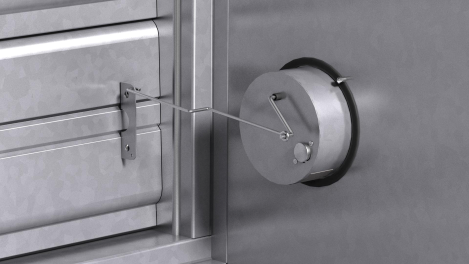
OCI (Open or Closed Indicator) blade-driven switch
3. Addressable Damper Testing Interface Modules
Fire/smoke dampers can also integrate with the BAS through BACnet® testing modules. When paired with a position-indicating device, these modules provide damper status and enable remote testing, an advantage for meeting NFPA 80 and 105 inspection requirements. They can also reduce installation cost by eliminating separate addressable relays or switches supplied by others. Refer to local code and damper testing module listings for suitable applications.
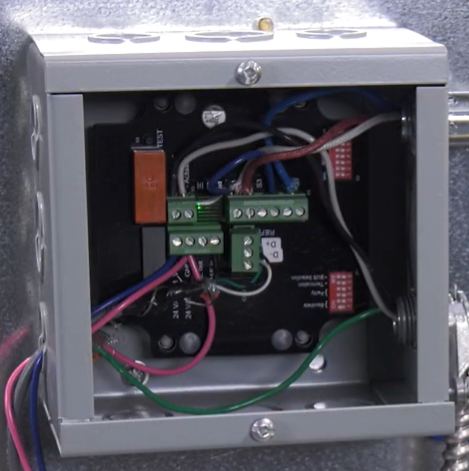
BACnet® testing module
4. Fire Alarm Supervisory Modules
Position-indication switches can also report through the fire alarm system using supervisory modules. The fire alarm control panel monitors the device and passes its status back to the BAS. This ties damper performance into the life-safety workflow but requires added coordination and more complex wiring between trades.
5. Actuators with Built-In Analog Feedback
Some actuators include integrated feedback devices such as potentiometers or 0–10V/4–20mA outputs. These provide continuous, proportional position information rather than simple end-switch feedback. This approach is useful for modulating fire/smoke dampers but may be limited by available BAS analog input capacity.
6. Current Sensing
In retrofit situations, current sensing can infer damper position based on changes in actuator current during operation and when the actuator reaches its fully open or fully closed position, also known as end-of-travel stall. While useful for diagnostics, it does not provide true position confirmation and is generally not accepted for life-safety compliance. Therefore, it is not typically used in life safety damper applications.
Summary
Accurate fire/smoke damper position indication is critical for commercial building safety and regulatory compliance. From simple auxiliary switches to advanced BACnet testing modules, the appropriate method depends on damper type, project needs, BAS capabilities, and code requirements. Properly integrated position-indicating devices reduce costs and ensure reliable damper operation throughout the building’s life.
For more information on Greenheck combination fire/smoke dampers, click here or contact your local Greenheck representative.