Indoor air quality (IAQ) in schools is fundamentally about health, learning, and student performance, and the clearest way to measure it is through CO₂ levels. Elevated CO₂ in classrooms signals inadequate ventilation, increased rebreathed air, and a higher likelihood of airborne contaminant exposure, all of which can negatively impact cognitive function, test scores, and absenteeism. Research consistently shows that lowering CO₂ levels through improved ventilation leads to better learning outcomes and healthier indoor environments, making CO₂ a practical, real-time metric for achieving truly healthy air in schools.
What Drives High CO2 Levels in Classrooms?
Most school HVAC requirements focus on temperature and energy efficiency, not whether classrooms consistently receive enough outdoor air (OA) during occupancy. While ASHRAE 62.1 gives code requirements for minimum ventilation rates, a design in accordance with code compliance does not guarantee indoor air health for students. As a result, many schools meet code on paper while students and teachers experience elevated CO₂ levels, increased recirculated (rebreathed) air, and degraded IAQ.
CO₂ is the missing link. Schools and design engineers need to “measure to what they treasure” by monitoring CO₂ levels, using HVAC equipment that provides higher outdoor air to reduce CO₂ levels for students and teachers, and including features such as energy recovery that reduce the operating costs of adding more outdoor air.
Why CO2 Levels in Classrooms Impact Learning and Health
CO₂ is not a harmful contaminant at typical indoor levels, but it is a proven indicator of:
- Ventilation ineffectiveness
- Rebreathed air fraction
- Likelihood of airborne pathogen accumulation
Unlike filtration or air cleaning, CO₂ can only be controlled through outdoor air ventilation, making it the most practical accountability metric for IAQ.
CO₂ levels directly correlate with outcomes that schools and parents should care most about: student performance and health. Multiple studies show that increasing outdoor air ventilation (and lowering CO₂) leads to measurable improvements in learning, such as:
- Faster task completion and improved concentration
- Higher standardized test scores
- Reduced errors and improved cognitive function
- Lower absenteeism (not only of students, but also of teachers and school staff)
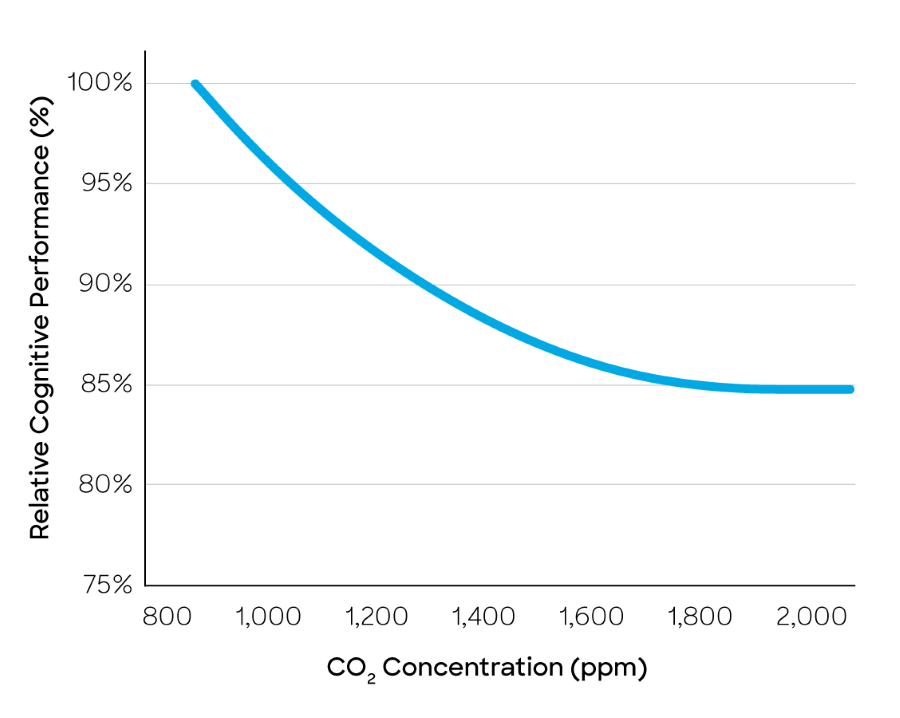
For example, reducing classroom CO₂ from 2,000 ppm to 1,000 ppm has been associated with an average of 12% faster task performance, 3% fewer errors, and 12% more students passing exams.
This graph shows data that was factored into these averages. As CO₂ concentration increases, student speed and reaction ability on classroom tasks and tests decreases.
At the same time, CO₂ is strongly correlated with recirculated air, which directly impacts exposure to airborne pathogens such as influenza and SARS-CoV-2. Lower CO₂ means lower concentrations of exhaled aerosols and lower transmission risk.
Bottom line: Lower CO₂ = better learning outcomes + reduced disease transmission.
The Only Way to Reduce Indoor Air CO2 Levels: Outdoor Air Ventilation
CO₂ cannot be filtered, captured, or “cleaned” out of indoor air. The only way to reduce CO₂ and the rebreathed air it represents is to properly distribute outdoor air ventilation. This makes ventilation the foundation of IAQ.
- Filtration helps remove particles, but not CO₂.
- Air cleaners supplement, but do not replace, ventilation.
- Only OA reduces CO₂, occupant-generated pollutants, and pathogen buildup simultaneously.
Balancing Indoor Air Quality and Energy Costs in Schools
Delivering outdoor air creates real energy challenges. Ventilation drives three major HVAC loads:
- Heating (cold outdoor air)
- Cooling (hot outdoor air)
- Humidity control (both dehumidification and humidification)
In many schools:
- Ventilation accounts for 30–50% of HVAC energy use
- Humidity control significantly increases operating costs
- Districts are forced to balance IAQ against limited budgets
Reducing School Ventilation Energy Costs
Energy recovery makes all ventilation targets more cost-effective. A ventilation system using energy recovery:
- Transfers sensible and latent heat between exhaust and incoming outdoor air
- Pre-conditions ventilation air before it reaches heating/cooling equipment
- Dramatically reduces energy required to deliver high OA rates
This enables schools to:
- Maintain CO₂ targets (e.g., ≤1,000 ppm)
- Deliver consistent required ventilation rates
- Control humidity more effectively
- Reduce heating, cooling, and moisture loads
- Lower operating costs and carbon emissions
Energy recovery ventilators (ERV), which include total enthalpy wheels or cores that transfer both heat and moisture energy between the incoming and exhaust airstreams, can be installed in either a rooftop or indoor application to reduce energy penalties while delivering high OA.
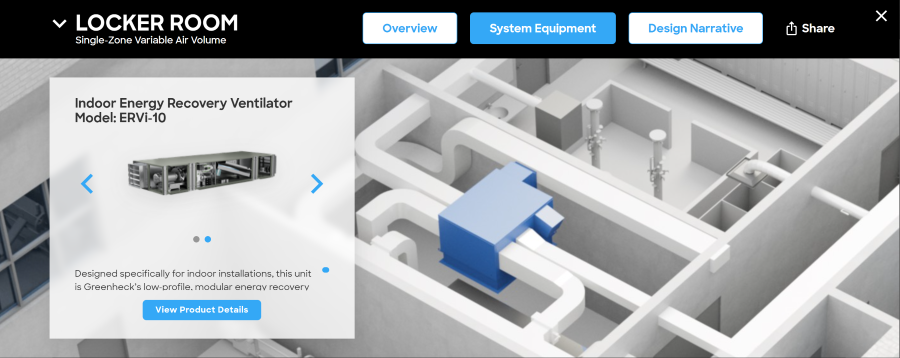
Indoor-mounted ERVs are ideal for applications with high volumes of exhaust air, such as school locker rooms.
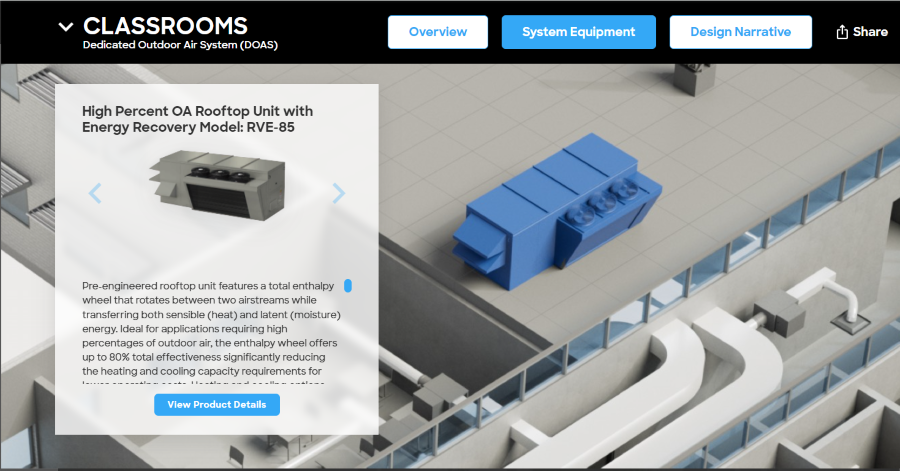
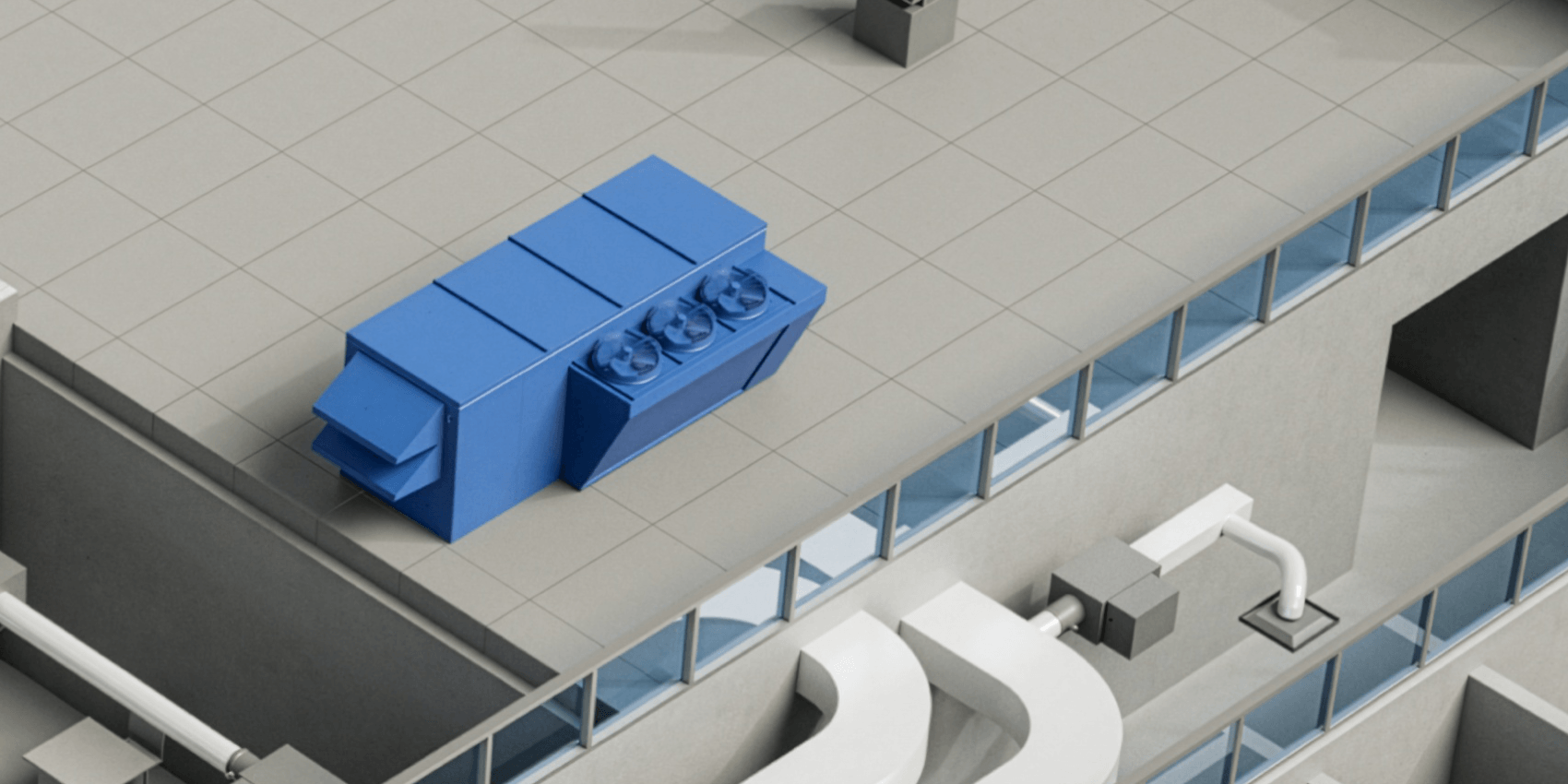
High-percent OA rooftop units can also be configured in a Dedicated Outdoor Air System (DOAS) application to incorporate energy recovery while conditioning 100% outdoor air to a neutral humidity and temperature.
If project constraints do not permit using energy recovery, look for rooftop units with efficiency-boosting features such as:
- Variable-speed compressors that meet space demands
- A modulating gas furnace or Silicon Controlled Rectifier (SCR) electric heater to match heating output to load
- Modulating hot gas reheat for humidity control
- EC motors for part-load performance
- Low-leakage, well-insulated construction
Monitoring CO2 Levels to Verify Ventilation Performance
Schools already monitor temperature, because comfort matters. They should also monitor CO₂ because:
- It is an easily verifiable metric of ventilation performance, enabling schools to confirm that HVAC systems are delivering the outdoor air needed to support healthy indoor air conditions.
- It provides a measurable link to occupant health, indicating whether classrooms are minimizing rebreathed air and airborne contaminant exposure.
- It correlates with student learning and academic outcomes, including concentration, cognitive function, and standardized test scores.
- It helps identify conditions that contribute to absenteeism, allowing schools to address ventilation issues before they impact students and staff.
- It is only controllable through outdoor air ventilation.
Explore Solutions for Healthier Classroom Indoor Air
Greenheck’s new interactive school model allows engineers to see how HVAC equipment is applied for ventilation and conditioning in a realistic K-12 environment. HVAC configurations are shown and explained, along with sample design narratives for specifying the equipment’s required features. Use the information on this page to communicate with school boards, facility operators, general contractors, and architects on why your school design provides the low CO₂ levels needed to support superior learning and the energy efficiency to stay within operating budgets.