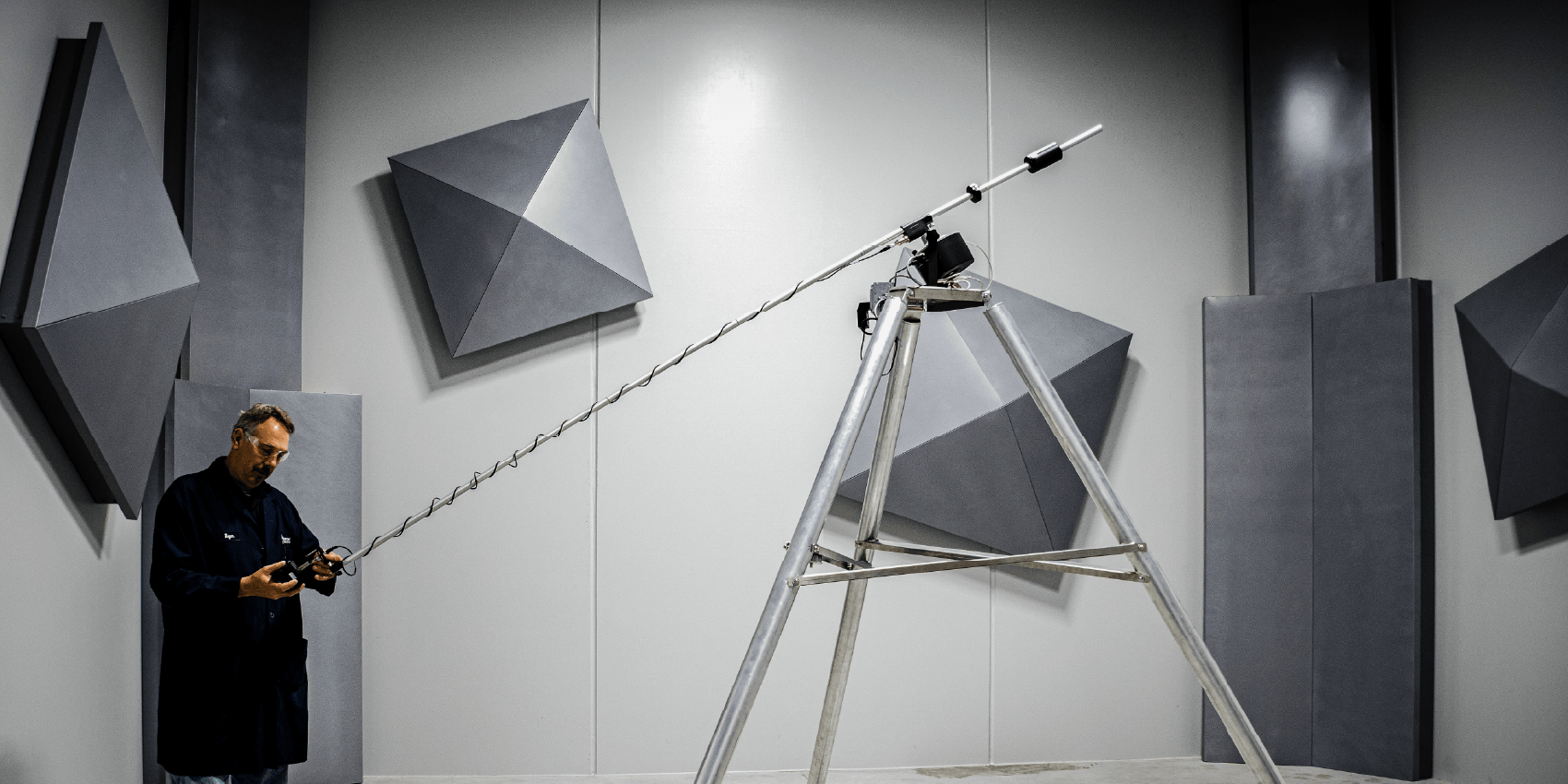
Fan sound is an essential consideration when selecting and applying fans for a commercial building. It is important for HVAC specifying engineers to understand sound power, sound pressure, and how a manufacturer’s fan sound ratings are certified by the Air Movement and Control Association International, Inc. (AMCA).
Greenheck’s fan sound application guides dive into these topics to help engineers incorporate acoustic performance into their system designs. This blog post provides a quick look at the first two articles in our four-part series.
The Basics of Fan Sound
Greenheck’s guide defines fan sound and other related terms, then discusses typical sound calculations and considerations. The article provides insights into questions such as:
- What is sound? A form of energy resulting from vibrating matter. Our ears distinguish one sound from another by its loudness and pitch.
- What is fan sound? A combination of frequencies made up of many different mechanical and aerodynamic components within the fan. Fan sound is presented on an octave band basis in accordance with ANSI standards.
- What are sound power and sound pressure? Fan sound power is determined through tests conducted in accordance with ANSI/AMCA Standard 300-24, “Reverberation Room Methods of Sound Testing of Fans.” Sound pressure levels represent the energy a microphone or our ears would receive and depend upon the distance from the source as well as the acoustical environment of the listener.
- How does AMCA rate fans for sound? The AMCA Certified Ratings Program (CRP) has a label (seal) for “air” and a seal for “air and sound.” A sound rating cannot exist by itself. It must have a corresponding aerodynamic rating because sound is a function of the fan design and duty rating point.
Learn how to calculate and account for fan sound in your design by reading our full application guide.
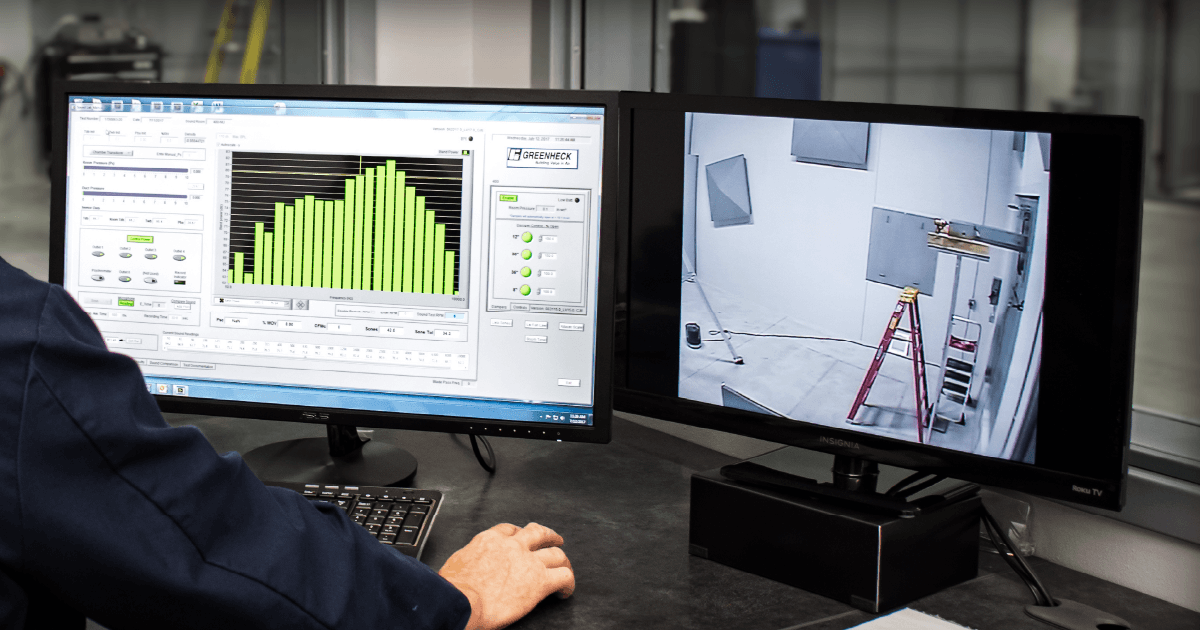
Greenheck tests our fan products for acoustics and aerodynamics in an AMCA Accredited Laboratory.
Understanding the Development of Fan Sound Data and the Product Rating Process
This guide focuses on how fans are tested and rated to AMCA standards during a manufacturer’s product development process. It addresses questions like:
- What do acoustic performance tests in an AMCA-registered sound facility test for? They test for inlet and outlet sound power levels in a semi-reverberant room.
- What is the test method? The test measures the sound pressure levels produced by a fan against those produced by a reference sound source (RSS) in the same acoustic environment. The difference (amount of sound absorbed by the room) between the calibration numbers and what is measured is added to the measured values for the test fan.
- What other acoustic consideration exist for fan applications? Using AMCA Standard 320, “Laboratory Method of Sound Testing Fans Using Sound Intensity,” a manufacturer can establish the sound power level of the sound radiating from a fan’s casing. This information is particularly useful when fans are to be applied in buildings next to offices or conference rooms.
- Why is it important for a fan to be AMCA-certified for sound? A manufacturer that participates in AMCA’s Certified Ratings Program (CRP) assures the industry that the products and equipment will perform as stated.
Read the full application guide to understand more about what goes into AMCA-certified ratings for acoustic and aerodynamic performance.
Greenheck’s resource library includes many other fan design application guides to support your next building project, as well as videos, technical data, podcasts, and more.
Ceiling Exhaust Fans Fans Overhead HVLS Fans